


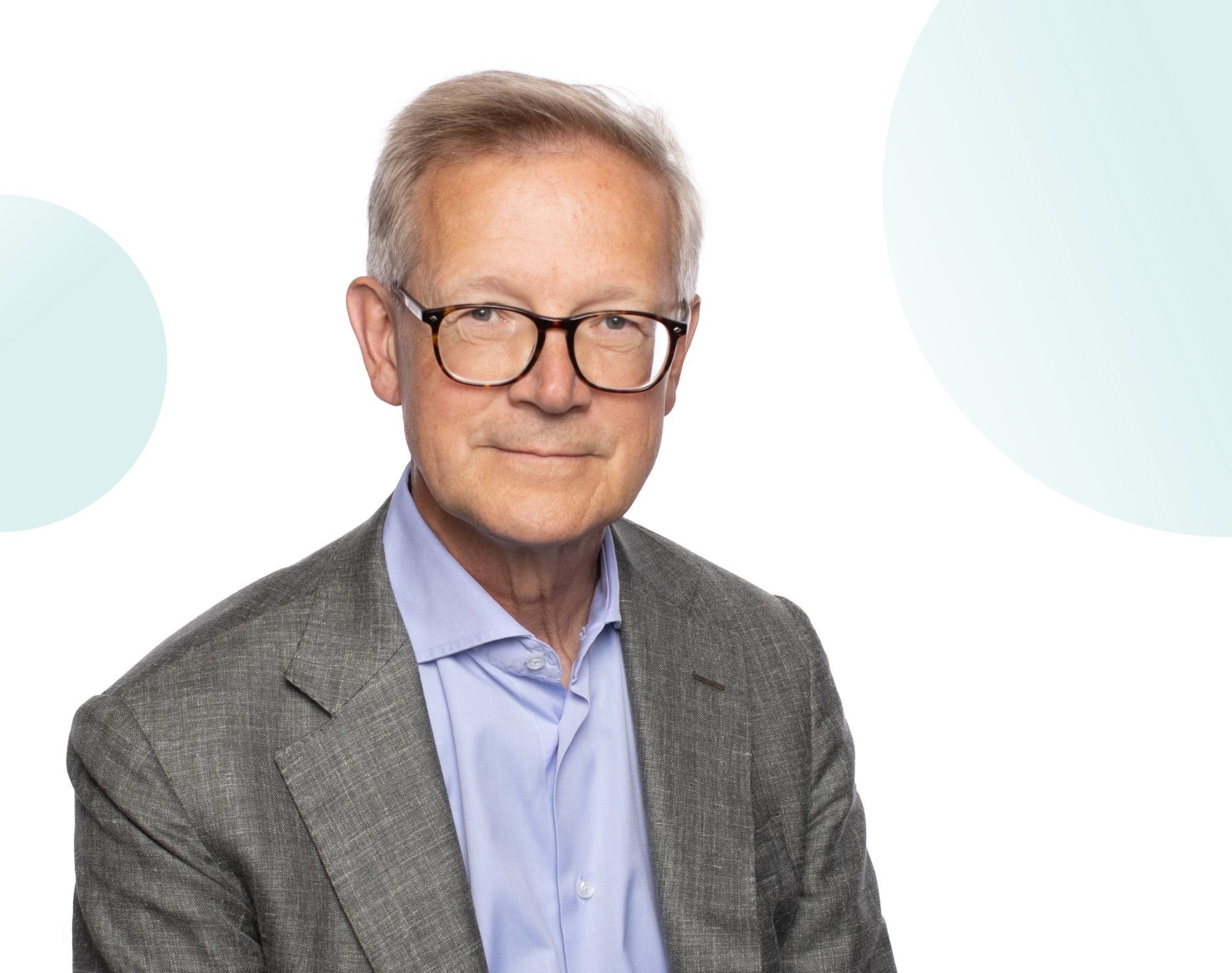
What We Hold in Common - Interview with Philip Aminoff
I met Philip Aminoff at Marsio on Aalto’s campus to talk about something that sounds simple but is surprisingly hard to put into words: what it really means to own businesses across generations—plural, not singular—without turning inheritance into either a slogan or a burden.
But first: who are the Aminoffs? The name appears in records from the 16th century and has been associated over time with military leadership, public service, landownership, and enterprise. Ennobled in Sweden in the early 1600s, the family later became active in Finnish business and industry. Philip Aminoff is a fourth-generation entrepreneur within that lineage. Today, he serves as Chairman of Helvar Merca, Tenetor, and Helectron, and Deputy Chairman of Veho (automotive retail), Fastems (factory automation), Helvar (lighting controls), and Electrosonic (audio-visual technology).
Philip describes the setup not as a “family company,” but as a long-lived ownership system: operating firms held through holdings, with family members owning different shares “by personal choice.” The holdings don’t run operations. Each subsidiary has its own identity, culture, and board—usually non-family led—so the business stands on its own, not on a surname.
“We don’t put the family name on them,” he says. “They are themselves.” He calls the model “a bit like private equity, without the intent to sell.”
What drives it isn’t control, but responsibility renewed with each generation—against entitlement and nostalgia.
When I ask how this was passed on to him, he notes that the question assumes a single origin story. He didn’t grow up on factory floors or learning a product, in the usual sense.
Operational closeness came through his uncle—deeply involved, later chair of most companies—and through ordinary rhythms: weekly tennis, office chats, the kind of proximity that teaches without announcing itself.
And behind it all was his grandmother, who had effectively owned the businesses herself and carried the legacy of the builder’s generation. What Philip absorbed was not how to make a particular product, but how to think about ownership: long-term principles rather than “a particular type of widget.”
For Philip, good ownership comes down to clarity. “The single most important thing is to realize that the role of the owner changes over time”—from entrepreneur, to owner-manager, to owner-chair, and eventually “owner only.” There’s no ideal form, only a role that must be understood and clearly communicated.
Families stumble, he says, not on money but on ambiguity. As ownership widens, you can’t “just discuss and decide.” You need defined boards and, for major issues, an owner forum. Boards must know where their mandate ends; owners must ensure their input is grounded, not impulsive.
He also questions the “third-generation curse.” Companies disappear for many reasons; what matters is whether wealth and values endure, not whether a name does.
In his family, ownership is held “under your responsibility for a transitory period of time,” with a duty to pass it on, improved. The danger comes when inheritance turns into entitlement—when consumption replaces stewardship.
Asked to name three turning points, Philip chooses crises and transitions, not triumphs.
First: the oldest company, founded in 1901 by a 22-year-old entrepreneur importing machinery and raw materials into Finnish industry under the Russian Empire. He died at 29. A German-born colleague in Tampere—also his brother-in-law—stabilized the business by acquiring the assets. The origin is sudden loss, high-risk continuity, and entrepreneurship rather than inherited wealth.
Second: family structure under pressure. Philip’s great-grandfather—his grandmother’s father—had a son and two daughters. The son died young, and during WWII the father himself died before deciding whether to sell. The assets were divided between Sweden and Finland, with most of the Finnish businesses going to his grandmother, who had no formal education. Her husband, a medical doctor, left his career to steward what she inherited. Again, responsibility arrived unplanned.
Third: a modern shift in 2002. After decades without an explicit owner strategy, the family decided to keep only businesses with the potential to lead their markets—and to sell the rest. The process took nearly two years and resulted in selling about half of the family’s business activities to create focus.
Philip is careful about the absence of the family name. It’s not branding minimalism, but historical accuracy. The Aminoffs became owners through inheritance after WWII. “These are not, in that sense, Aminoff companies,” he says. “We don’t want to take that away from the founders.”
On governance across generations, Philip returns repeatedly to one tool: “observerships.”
Young shareholders attend board meetings as observers—asking questions, learning the business—while the board gets to know them. It’s a two-way loop: observers report back to fellow owners on culture and decision quality; boards assess their commitment and growth. Over time, those who’ve done this across several companies become credible board members.
He also stresses making the next generation feel like a team, even when they’re distant cousins. A non-family mentor has helped their 18–33-year-olds build confidence, stay engaged, and handle hard topics—so they can eventually meet the current generation “as equals.” Succession, in his view, is not just individual readiness but collective cohesion.
On heritage, he rejects the idea that family firms are stuck in the past. Heritage can trap you or propel you. He recalls a line: “heritage creates future,” and another, often attributed to Gustav Mahler: tradition is “not the worship of ashes, but the passing on of the flame.”
He points to Helvar as proof: exiting radios and televisions when scale favored American and Japanese giants, pivoting to lighting technologies, and later helping shape a European digital lighting protocol—once adopted, a sign the company had found “firm footing.”
Near the end, I ask for one principle he would “etch in stone” for the next generation. He avoids business doctrine and offers the family motto in Latin: nec adversa, nec prospera flectent—“that neither adversity nor prosperity shall bend you.”
He calls it stoicism: don’t be carried away by success, don’t collapse under setbacks. A calm pursuit. “This too shall pass.”
It’s a deceptively simple line for a system that spans multiple companies, multiple boards, multiple generations—and the constant human risk of confusing stewardship with entitlement.
Perhaps that’s the point: the most durable family-business ideas are often not elaborate at all. They are short sentences that are hard to live.


